
If you're losing hair, you've probably already been down the rabbit hole. Shampoos, tablets, fibres, transplants, and somewhere along the way, scalp micropigmentation. At Scalp Aesthetics SMP, one of the first questions we hear at a consultation is simple: is SMP actually worth it?
We'd rather you walk in knowing the full picture than find out after. So here's our honest take on what SMP is, what it does well, where it falls short, and who it suits.
What SMP actually is
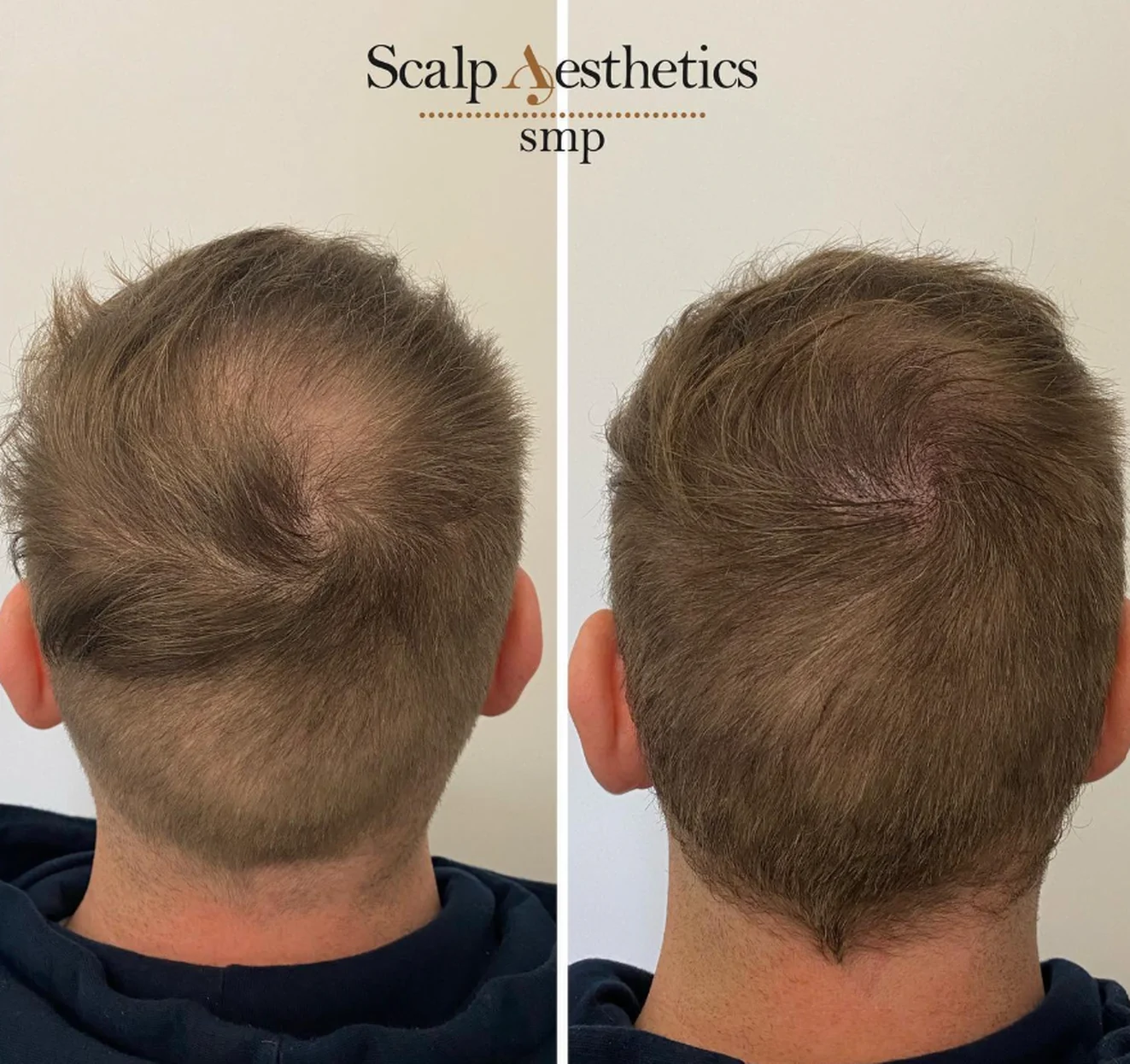
Scalp micropigmentation is a cosmetic treatment where we place tiny dots of pigment into the top layer of the scalp. Each dot copies the look of a hair follicle. Done properly, the result looks like a closely shaved head of hair, a sharper hairline, or simply thicker-looking hair where the scalp was showing through.
We always make one thing clear from the start. SMP does not grow hair. It creates the appearance of hair. For a lot of our clients that's exactly what they want, but it's worth knowing before you go any further.
Most of our clients are finished in three sessions, spaced out so the skin can settle and we can build up the density gradually. Larger areas and very fair skin sometimes take a fourth.
The pros of SMP
It works for most types of hair loss
SMP isn't only for men going bald on top. At our Dublin studio we use it for:
- Receding hairlines and full or partial baldness in men, see SMP for men
- Thinning hair and a visible scalp in women, see SMP for women
- Patchy hair loss from alopecia, see SMP for alopecia
- Scars from hair transplants, surgery or injury, see SMP for scar camouflage
- Adding density to thinning hair that's still there, see SMP for hair density
Because it works on the look of the scalp rather than the hair itself, it can help in situations where other options can't.
No surgery and no downtime to speak of
There's no cutting, no stitches and no general anaesthetic. Most of our clients go back to work the next morning. You might have some redness for a day or two, but nothing that keeps you at home.
Compare that to a hair transplant, which involves surgery, a healing period, and months of waiting to see results.
You see the result straight away
With SMP, you walk out of the first session already looking different. The result builds over the sessions, but there's no waiting a year to find out if it worked.
Very little daily effort
Once it's healed, there's nothing to apply, nothing to wash out and nothing to fall off. No fibres on the pillow, no worrying about rain or the gym. For people who've spent years hiding hair loss, that's often the biggest win our clients tell us about.
It's long lasting
SMP lasts for years. The pigment softens slowly over time, which is normal and expected, and a quick top up session brings it back. More on that below.
It can work alongside other treatments
If you're already on a hair loss treatment or you've had a transplant, SMP doesn't have to replace it. We often use it to fill in the gaps and make the overall result look fuller.
The cons of SMP
It doesn't grow hair
Worth saying twice. If your goal is longer hair you can style, SMP alone won't get you there. For men with no hair on top, the look is a close shave. For women and for density work, it makes thinning hair look fuller, but the hair you have is still the hair you have.
You'll need touch ups
The pigment softens over time, especially with sun exposure. Most people come back for a top up when they notice it has lightened. It's not a big job, but it's not a one and done forever either.
Men usually need to keep it short
For full coverage on a bald or shaved head, SMP looks best when the rest of your hair is kept short to match. If you love growing your hair out, think about whether you're happy keeping a short style long term.
This doesn't apply in the same way to women or density treatments, where the pigment sits under longer hair and simply stops the scalp from showing through.
The artist matters more than anything
This is the big one, and we won't pretend otherwise. Bad SMP is very hard to fix. Pigment that's too dark, dots that blur and spread, or a hairline that looks drawn on are all signs of rushed or inexperienced work. Removal is possible but it's slow, uncomfortable and not guaranteed to be perfect.
That's why we tell everyone the same thing: choosing who does your SMP matters more than how quickly you can get booked in. At our studio, Lorena designs your hairline and does every session on it herself. You can see her healed results here.
There's some aftercare
For the first few days after each session you'll need to keep the scalp dry, avoid heavy sweating, and stay out of the sun, pools and saunas. It's a short window, but plan around it if you have a holiday or a big event coming up. We'll walk you through all of it before you leave.
It's a commitment
SMP is long term. It's not something to do on a whim. If you're unsure, take your time, ask questions, and come in for a consultation before deciding. We never rush anyone into it.
Who SMP suits best
From what we see in the studio, SMP tends to be a great fit if you:
- Are happy with a short or shaved look, or want thinning hair to look fuller
- Want a result without surgery
- Are tired of fibres, concealers and hats
- Have scars on the scalp you want to hide
- Have alopecia and want a consistent, even look
It may not be the right choice if you want hair you can grow long and style, or if you're not ready for something long term yet. If that's you, we'll tell you straight.
What to ask before you book SMP in Dublin
Whoever you go with, ask these questions first. We're happy to answer every one of them:
- Can I see healed results, not just fresh ones? Fresh SMP always looks crisp. Healed work, months later, shows the real skill.
- How many sessions will I need? You should get a clear answer for your own scalp, not a one size fits all number.
- What pigment do you use, and how do you match the shade? The colour should suit your skin tone and natural hair.
- What does aftercare involve? A good practitioner will walk you through it properly.
- What happens when I need a top up? Know the plan before you start.
If a clinic can't answer these clearly, keep looking.
So, is SMP worth it?
For the right person, yes. SMP gives a sharp, natural looking result with no surgery, very little daily effort, and a confidence boost that our clients often say they wish they'd had years earlier.
It's not a miracle cure and it doesn't grow hair. It needs a skilled artist, a bit of aftercare, and the odd top up. But if you go in with the right expectations and the right practitioner, it's one of the most practical answers to hair loss out there.
The best way to know if it's right for you is to talk it through with us. Lorena has been doing SMP in Dublin since 2018, and at a free consultation she'll look at your scalp, your hair loss and what you want from it, and give you an honest answer, even if the answer is no.
Quick answers
Does SMP grow hair?
No. SMP is a cosmetic treatment that creates the look of hair follicles on the scalp. It does not grow hair, and it can be used alongside hair loss treatments or after a transplant.
How many sessions does SMP take?
Most of our clients are finished in three sessions, spaced out so the skin can settle in between. Larger areas and very fair skin sometimes take a fourth. You are told the number at your consultation, before you commit to anything.
How long does SMP last?
Years, not months. Pigment softens gradually with sun exposure and skin turnover, and most people come back for a touch-up when they notice it has lightened.
Can I go back to work after SMP?
Yes. There is no surgery involved, and most clients go back to work the next morning. Some redness for a day or two is normal.